
How Elite Performers Shine Under Pressure: 3 Principles for Leaders
There is a myth that elite performers are simply born with the mental toughness to shine under pressure. But when I stood on the start line at a World Championship, I wasn't relying on a sudden burst of adrenaline or trying to summon confidence from nowhere. I was relying on something built months and years prior.
Pressure simply reveals what is already there. If you haven’t done the groundwork, the cracks will show.
Whether you are lining up for a race or leading a company through a high-stakes transition, executing under intense pressure, these three principles are essential.
1. Rehearse the Reality, Not Just the Result
Most people visualise success. The podium. The medal.
I did that too. But the rehearsal that made the real difference was focused on the moments that would test me most.
In a marathon kayak race with 60 boats on the line, you must go out fast to get clean water and avoid the chaos at the back. I visualised that start. I visualised the portages, where you jump out, run 100 metres with the boat, and get back in (like a mini-triathlon mid-race!). Making a break on that final portage became my signature move, so I rehearsed it until it was automatic. I visualised breakaways, tight turns, a sprint finish, and even getting boxed into the pack and fighting my way out.
The goal wasn’t to dwell on what could go wrong, but to train my brain to recognise those situations. When the pressure hit mid-race, it didn’t trigger panic. My brain just said, “We’ve been here before. We know what to do.”
Mental rehearsal does three things:
- Builds confidence: Seeing pivotal moments in your mind a thousand times fuels your belief that success really is possible.
- Creates new neural pathways: It wires your brain for new or difficult situations, making your response automatic in the heat of the moment.
- Eliminates surprise: When nothing feels unexpected, panic is replaced by calm.
2. Focus on the Process, Not the Outcome
Under pressure, the mind naturally jumps ahead to the result – the gold medal, the big target, or how a presentation will land.
But worrying about the outcome breeds anxiety and burns energy on things you cannot influence. In a race, if I worried about a sudden side wind or my competitors, I was sabotaging my own performance. The secret to performing under pressure is shrinking your world down to what you can control.
For leaders, this means filtering out the noise. Stop worrying about wining the pitch or hitting the target and focus on the process that gets you there — your equivalent of the race strategy, the next paddle stroke, or the next tactical decision. You cannot control the market, but you can control your process and your immediate next step.
Instead of staring at a daunting finish line, focus on the process, it does three things:
- Anchors you in the present: It keeps your head strictly on immediate execution, grounding you in what matters right now instead of letting your mind wander.
- Saves your emotional energy: You stop wasting mental strength on uncontrollables, conserving energy for high-impact work.
- Restores your agency: You can’t always dictate the final result, but you always control your next move. That’s empowering.
3. Build Deep Trust Before the Pressure Hits
Under intense pressure, there is no time to tip-toe around feelings. You must be able to say exactly what needs to be said, right then and there.
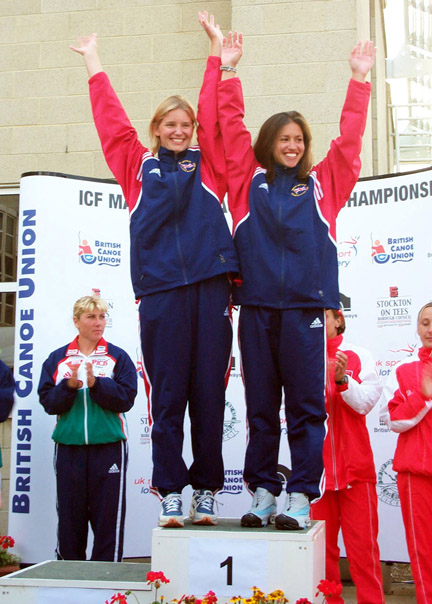
I remember warming up for the World Championships in the doubles boat (K2) with my partner, Helen. The boat felt sluggish; the spark was missing. You don’t normally alter your routine right before a major championship, but I couldn’t sit there quietly. I told Helen how I felt and suggested we change our warm-up on the fly. There was no blame. We trusted each other completely and felt safe to call it out because we had one shared goal: we just wanted to win. And we did!
But you can only give and receive those brutal truths if you have built a foundation of deep trust long before the start gun fires.
In the corporate world, leaders often mistake polite harmony for trust. Some teams say to me, “we get on so well and we never disagree.” That’s an alarm bell. Real trust isn’t about being nice. It’s about creating an environment where people feel safe enough to disagree and deliver hard truths without it becoming personal.
When your team knows critique comes from a place of absolute positive intent, friction stops being personal. Without that baseline of honesty beforehand, people will hesitate when the pressure mounts. And under pressure, hesitation is fatal.
Building deep trust delivers three major advantages:
- Accelerates decision-making: You cut through diplomacy and get straight to the real issues when every second counts.
- Removes personal ego: Feedback is received as a tactical adjustment to win, not a personal attack.
- Finds optimal solutions faster: When no one is afraid to flag a blind spot, you find the best solution before it’s too late.
What this looks like under pressure
When those three principles are genuinely in place, Pressure stops being a threat to your performance and becomes something you have already prepared for.
I see the same pattern in the organisations I work with. The teams that perform well under pressure aren’t the ones who try hardest in the moment they are the ones who have done the work beforehand. They have rehearsed the difficult scenarios and built the kind of trust that allows hard things to be said. And they focus on What’s Important Now (WIN strategy)
Pressure reveals what has been built
The question is whether you have built something worth relying on.
If you are heading into a demanding period, ask yourself:
- Have you rehearsed the difficult scenarios — not just the outcome you want?
- Are the conditions in place for honest, direct conversation?
- Are you clear on what you can and can’t control and where you need to place your attention for maximum impact?
High performance under pressure is not about rising to the occasion.
It is about making sure the occasion is one you have already prepared for.

Published: Wednesday 27 May 2026
Written by: Anna Hemmings, MBE, OLY.